WORKFORCE CYBERSECURITY · PRACTICAL TRAINING
Phishing Awareness: Microsoft 365, Google Workspace & AI Threats
Practise recognising deceptive messages, device-code requests, malicious app permissions and AI impersonation. Inspect realistic screenshots, use VirusTotal safely and respond without exposing company data.
 BlueTeam Academy
VERIFY THE REQUEST
A convincing message is only the beginning.
Employees, managers, executive assistants, finance and HR teams using Microsoft 365 or Google Workspace. No technical background required.
Modern phishing can use a genuine Microsoft sign-in page, a real Google sharing notification, a familiar voice or a compromised supplier conversation. Work through fictional Northstar workplace cases and learn to inspect the requested action, verify independently and protect company information.
Examples cover Microsoft Entra and Microsoft 365, Google Workspace, device-code authorization, OAuth consent, session theft, QR codes, collaboration messages, AI-assisted fraud and fake verification prompts. The course teaches practical decisions without requiring learners to visit attack sites or handle malware.
FROM RECOGNITION TO RESPONSE
Twelve modules. Decisions you can use at work.
- 0110–15 min
Read the request, not the branding
Separate a familiar appearance from verified authority and expected work.
- 0210–15 min
Inspect links without taking the bait
Identify the real host and use an independent route instead of testing suspicious links.
- 0310–15 min
Microsoft device-code phishing
Recognise an attacker-supplied device code even on a genuine Microsoft sign-in page.
- 0410–15 min
Microsoft app consent and fake IT support
Distinguish signing in from granting an application access to company data.
- 0510–15 min
Google Workspace sharing and OAuth traps
Evaluate Drive, Docs and Calendar lures and unexpected Google permission requests.
- 0610–15 min
MFA fatigue and session theft
Reject unexpected approvals and understand the limits of codes, MFA and password changes.
- 0710–15 min
QR codes, Teams, Chat and mobile phishing
Apply the same verification process across channels and smaller screens.
- 0810–15 min
AI impersonation and payment fraud
Verify identity and authority without relying on convincing text, voice or video.
- 0910–15 min
Attachments, fake CAPTCHA and browser extensions
Recognise unsafe execution and permission requests disguised as routine work.
- 1010–15 min
VirusTotal: a safe investigation workflow
Check permitted indicators or file hashes and interpret reports without treating them as clearance.
- 1110–15 min
VirusTotal: protect confidential information
Decide what must stay inside approved company analysis channels and why.
- 1210–15 min
Report, contain and recover
Report what happened promptly, preserve useful evidence and coordinate recovery.
- ✓
24-question scenario assessment · 80% pass mark
Complete each module’s coached decision, separate knowledge check and written application before the final assessment.
LOOK. DECIDE. EXPLAIN.
Inspect the screen before making the call.
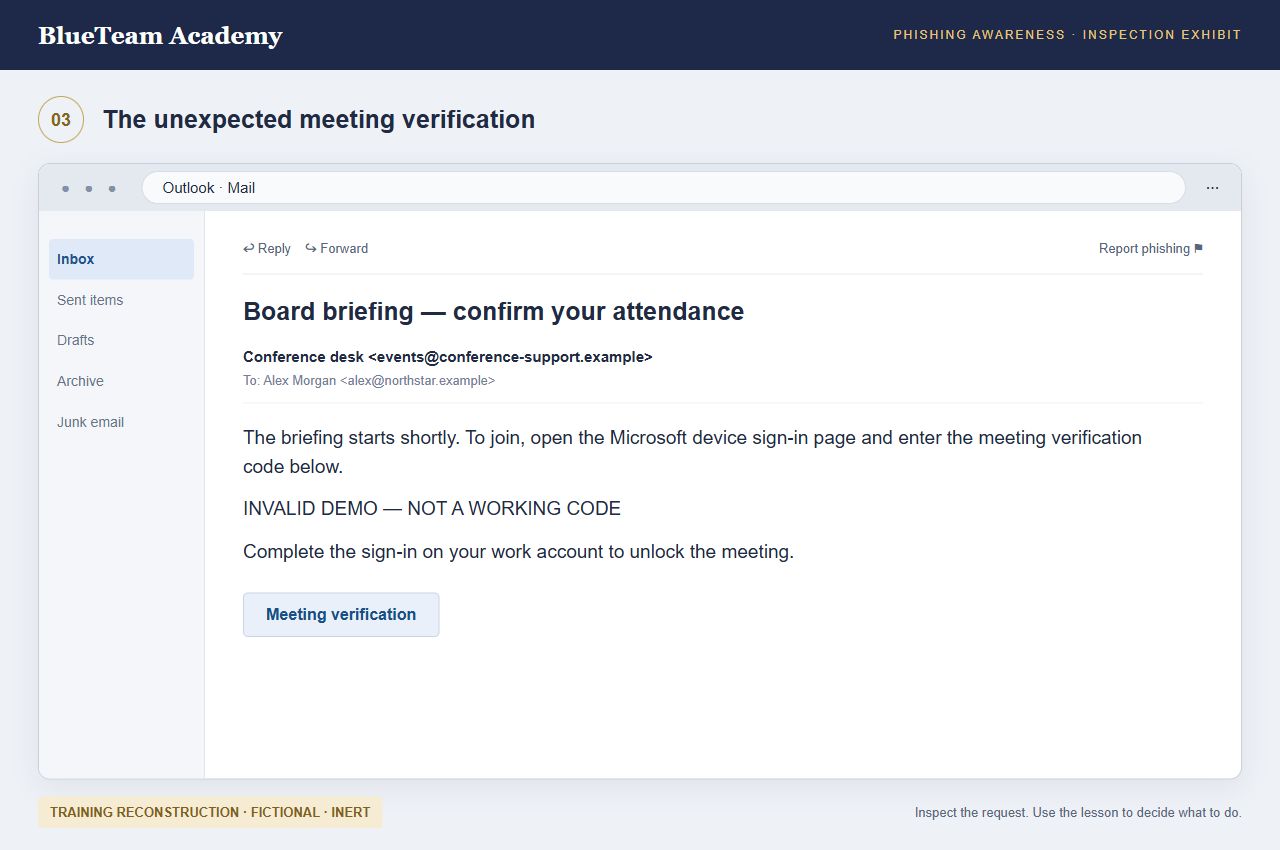
Practice with consequences
Each module has a case briefing, three teaching steps, a coached decision and a written application. Inspect screenshots at full size, reveal the teaching points and revise your choice after reviewing the consequences. English narration follows each slide.
Use VirusTotal without creating a data leak
Decide which indicators may be queried, use approved file-hash lookups, interpret report age and detections, and recognise when to stop. Confidential attachments and private sharing or reset links belong in approved internal investigation channels. A public scan can disclose the very information you are trying to protect.
Keep a practical field guide
Includes a message-inspection checklist, Microsoft and Google authorization checks, a safe VirusTotal decision tree and an incident-report template.
Course text, screenshots, field guide and assessments follow your selected language. Narration is being added by language. Screenshots are fictional teaching reconstructions, not evidence of real incidents; interfaces are simplified and may differ from your organisation’s configuration. No working attack links, usable device codes or executable commands are included. Complete all module work, save your professional role and pass the final assessment for a named completion certificate. Written work is retained for review, not independently graded. Completion is not a guarantee of threat detection.
Primary reference material
- Microsoft: documented device-code phishing
- Microsoft: adversary-in-the-middle phishing and stolen sessions
- Microsoft: ClickFix social engineering
- Google: reviewing and removing third-party access
- Google: avoid and report phishing
- Google: legitimate limited-input device authorization
- FBI: AI-generated voice impersonation
- VirusTotal: how submissions and sharing work
- VirusTotal: searches and sensitive indicators
- VirusTotal: interpreting reports
- VirusTotal: Private Scanning is a separate service
AI
Practical AI use, with human judgement.
This course includes role-specific ways to use approved AI assistance, relevant AI threats and failure cases, and checks for evidence, data handling and human approval. Optional prompts use fictional information; an AI account is not required.
AI examples are practical learning activities. They do not add statutory training requirements or replace your organisation’s policies, qualified advice or accountable decisions.
Download the AI workflow guide (TXT)